
If you spend an hour or more behind the wheel every day, your car is not just transportation. It is office space, thinking space, and a significant line item in your monthly budget. Choosing the wrong commuter car costs you money in fuel and potentially in health through driver fatigue. This guide breaks down the best options in 2026 for people who take their commute seriously.
What to Look for in a Commuter Car
Not all of these criteria matter equally depending on your specific situation, but here is the complete checklist for evaluating a long-distance commuter vehicle:
- Fuel efficiency: EPA combined MPG or MPGe rating. Aim for at least 35 MPG combined for a gas car; 40+ for a hybrid.
- Driver comfort: seat quality, lumbar support, and how the seat feels after 45 minutes of continuous driving, not just in a showroom
- Cabin noise insulation: at highway speeds, a quiet cabin reduces fatigue significantly over time
- Driver assistance technology: adaptive cruise control, lane centering, and automatic emergency braking are not luxury features for commuters; they are safety and fatigue management tools
- Reliability: a commuter car that spends time in the shop costs you money twice: in repairs and in the disruption to your schedule
- Total monthly cost: payment plus insurance plus fuel, not just the lease or loan payment alone
Want real numbers on your next car?
Tell us what you're looking for and we'll source your options across 350+ dealer partners. There's no obligation.
The Best Commuter Cars in 2026
Here are the top picks organized by vehicle type.
Toyota Camry Hybrid (Best Sedan Commuter)
The Camry Hybrid achieves around 46 MPG combined in the real world, which at average NJ gas prices translates to meaningful annual savings compared to a standard sedan. It has a comfortable and quiet interior, excellent reliability data, and Toyota's standard safety suite is included across most trims. Lease deals on the Camry Hybrid are not always aggressive because demand is high, but total cost of ownership over 36 months is hard to beat for high-mileage sedan commuters.
Honda Accord Hybrid (Best Balance of Comfort and Efficiency)
The Accord Hybrid competes directly with the Camry Hybrid and wins on interior refinement and driving dynamics. It achieves around 44 MPG combined and has one of the quieter highway cabins in its class, which matters over a long commute. Honda Sensing comes standard on all Accord trims, including adaptive cruise control with low-speed follow. If you spend significant time in stop-and-go traffic as well as highway miles, the Accord Hybrid handles both scenarios well.
Toyota RAV4 Prime (Best Plug-In Hybrid for Commuters)
If you have a charging outlet at home or at work, the RAV4 Prime is one of the most cost-effective commuter vehicles available. It offers around 42 miles of all-electric range, which covers the average NJ daily commute without burning a drop of gas. When the battery depletes, it operates as a standard hybrid at roughly 38 MPG. For commuters whose round trip is under 40 miles, a fully charged RAV4 Prime can cost nearly nothing in fuel per day.
Hyundai Ioniq 6 (Best for EV-Ready Commuters)
The Ioniq 6 is worth considering if you have reliable charging access and your commute is under 200 miles round trip per charge cycle. It offers 361 miles of range on the long-range rear-wheel-drive model, ultra-fast DC charging (10-80% in about 18 minutes on a 350kW charger), and one of the more aerodynamic and refined cabins in the EV segment. Lease deals on the Ioniq 6 have been competitive as Hyundai pushes EV adoption. The federal EV tax credit ended for vehicles acquired after September 30, 2025, so it is no longer part of the math. Focus on manufacturer lease incentives and fuel savings instead.
Honda CR-V (Best If You Need SUV Space Without the Premium)
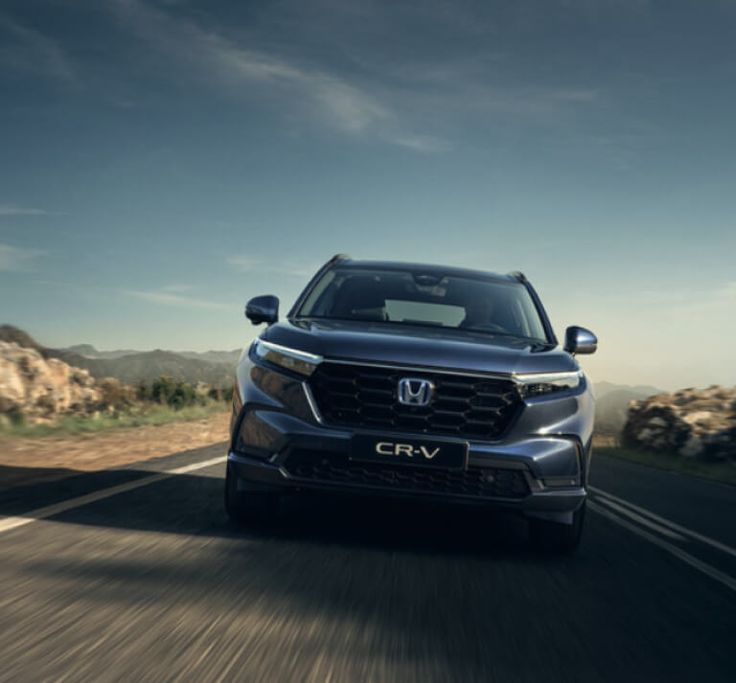
Not everyone needs the most efficient vehicle available. If you want a compact SUV with decent cargo space for a commuter who also uses the car for weekend activities, the standard Honda CR-V (non-hybrid) is a strong pick at around 32 MPG combined. It is practical, reliable, and available with Honda Sensing standard. The CR-V Hybrid pushes that to about 40 MPG if you want to step up the efficiency.
The Mileage Problem: What High-Volume Commuters Need to Know
Standard leases include 10,000-12,000 miles per year. If your commute alone generates 15,000+ miles annually, you are heading toward overage territory. Overage fees at lease end typically run $0.15-$0.25 per mile. At $0.20 per mile, 5,000 extra miles costs you $1,000 at turn-in, every 3 years.
The fix: negotiate a high-mileage lease upfront, which adds a modest amount per month but eliminates the end-of-lease surprise. Alternatively, buying a reliable commuter vehicle outright and keeping it for 8-10 years avoids mileage penalties entirely. This is one of the few scenarios where buying clearly beats leasing for most people.
If you are comparing whether leasing or buying makes sense for your situation, our breakdown of the best SUVs for families in 2026 covers how to think through the lease vs buy calculation across different use cases.
Tech Features That Actually Matter on a Long Commute
Showroom features and commuter features are different things. Here is what actually matters when you are logging real miles every day:
- Adaptive cruise control with low-speed follow: handles highway and stop-and-go speed management so your right foot gets a break
- Lane centering assist: keeps the car centered in its lane without constant steering input on straight highway sections
- Cabin noise rating: look for reviews that specifically mention highway NVH (noise, vibration, harshness) performance
- Wireless Apple CarPlay and Android Auto: eliminates the cable clutter for hands-free navigation and calls
- Heated seats and steering wheel: underrated quality-of-life feature for NJ winters on an early morning commute
You can browse available inventory filtered by these features to find what is in stock and ready to go in the NJ area.
What to Expect to Pay
Lease pricing varies by month, dealer, and region, but here are realistic 2026 benchmarks for commuter vehicles, before taxes and fees (amounts due at signing vary, subject to credit approval):
- Honda CR-V: $350-$430 per month
- Toyota Camry Hybrid: $380-$460 per month
- Honda Accord Hybrid: $400-$490 per month
- Toyota RAV4 Prime: $480-$560 per month
- Hyundai Ioniq 6: $380-$480 per month depending on incentives
These ranges reflect real-world pricing across NJ dealers. Actual quotes will vary based on your credit, the specific trim, and what the dealer has in stock.
Getting the Right Deal for Your Commute
The right commuter car depends on your specific route, annual mileage, and whether you have charging access. There is no single best answer, but there is a best answer for your situation. At Vantage, we help NJ commuters work through these variables and source real pricing from multiple dealers so you are not just taking whatever one showroom offers.
If you want to see what your commuter car situation looks like with real numbers, get your free quote in under 5 minutes. No spam. No pressure. Unsubscribe anytime.