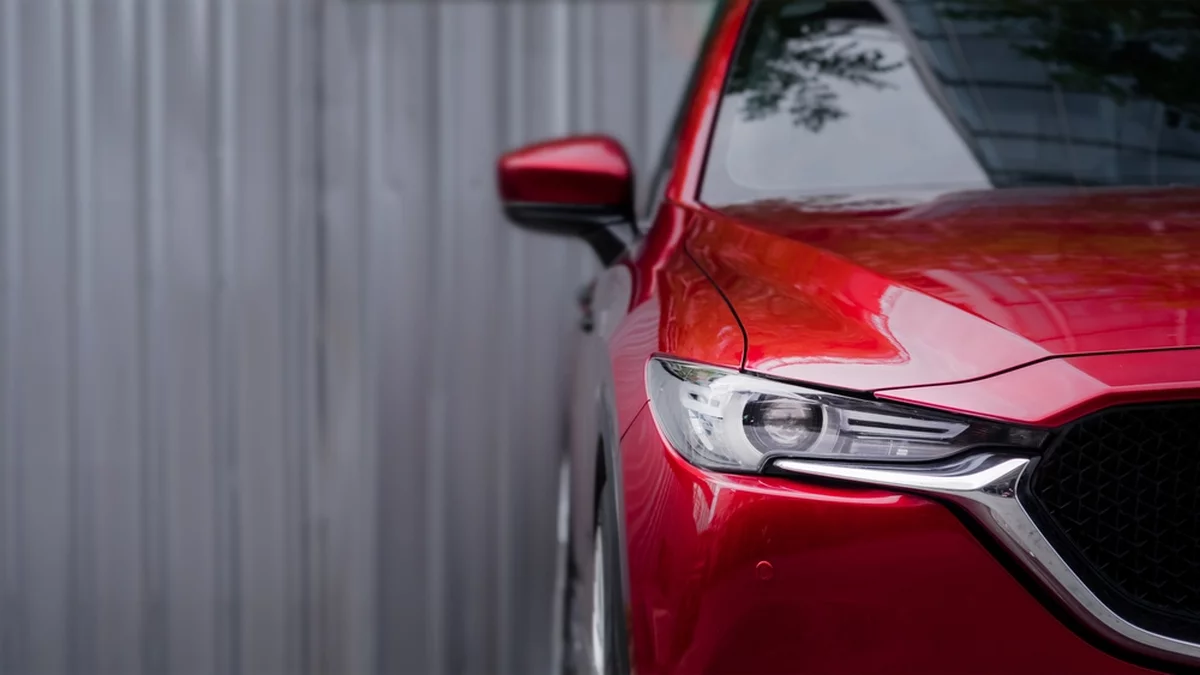
The Mazda CX-5 and CX-50 share a platform, a badge, and a base engine. They also share one of the strongest owner loyalty rates in the non-luxury SUV segment. But they are built for different drivers, and choosing the wrong one is a surprisingly easy mistake to make if you are shopping purely by price and trim level.
This guide covers the real differences: driving feel, performance options, off-road capability, technology, interior size, and what each one will actually cost you. If you are between these two, you will know which one fits your life by the time you finish reading.
Ready to run the numbers on a Mazda lease or purchase? Get a free Quick Quote and we will put together a full deal breakdown.
The Core Difference Between the CX-5 and CX-50
The Mazda CX-5 is the refined urban crossover. It is designed for smooth commutes, tight parking garages, and drivers who want a premium feel in everyday driving without paying a premium price.
The Mazda CX-50 is built wider and longer, with more ground clearance and a more planted, adventure-ready character. Mazda describes its own CX-50 with the phrase "bring it on" while the CX-5 is positioned around refinement. That difference in ethos shows up in real, tangible ways across every major category.
Want real numbers on your next car?
Tell us what you're looking for and we'll source your options across 350+ dealer partners. There's no obligation.
Quick Comparison: CX-5 vs CX-50 at a Glance
- Starting MSRP: CX-5 from $29,050 | CX-50 from $29,900 (gas), $34,750 (hybrid)
- Base engine: both use a 2.5L 4-cylinder with 187 horsepower
- Hybrid available: CX-5 no | CX-50 yes (219 hp hybrid option)
- Turbo available: CX-50 yes (256 hp on upper trims); the 2026 CX-5 has no turbo
- Ground clearance: CX-50 is higher, better for uneven terrain
- Wheelbase: CX-50 is longer, providing more rear passenger legroom
- Overall size: CX-50 is larger in length and width; CX-5 is more maneuverable in tight spaces
- Off-road tuning: CX-50 has available off-road-specific AWD modes and underbody protection
- Best for: CX-5 for city and suburban commuting | CX-50 for all-weather driving and outdoor-oriented lifestyles
Driving Experience: Refined vs Planted
The CX-5 uses an independent suspension setup tuned for a smooth, composed ride. It absorbs road imperfections well and feels lighter and more nimble through corners. If you spend most of your time on paved roads, the CX-5 is genuinely pleasant to drive day after day.
The CX-50 has a firmer, more planted ride. It is not uncomfortable, but you feel more of the road. That is a feature, not a flaw, for drivers who want better stability on gravel roads, winter driving, or light trails. The longer wheelbase also means less pitch and sway on the highway, which some drivers prefer on long trips.
Both models deliver Mazda's well-regarded Jinba Ittai driving philosophy, which roughly translates to horse-and-rider unity. Mazda engineers for driver engagement in a way that most competitors in this segment do not. Either way, you get a car that rewards attentive driving.
Performance and Engine Options
Both the CX-5 and CX-50 start with the same 2.5L naturally aspirated 4-cylinder engine producing 187 horsepower. From there, the options diverge.
The 2025 CX-5 offers a turbocharged 2.5L engine on upper trims, bumping output to 256 horsepower. It does not offer a hybrid option. Turbo trims deliver noticeably more responsive acceleration and are a meaningful upgrade for drivers who regularly merge onto highways or carry a full load of passengers.
The CX-50 also offers the turbo engine on select trims. Its key differentiator, though, is the hybrid powertrain. The CX-50 Hybrid uses a 2.5L engine paired with an electric motor for a combined output of 219 horsepower and significantly better fuel economy than either non-hybrid option. If efficiency is a priority, the CX-50 Hybrid is the only option in this comparison that delivers it.
Off-Road and All-Weather Capability
This is where the two vehicles separate most clearly. Both offer Mazda's i-Activ AWD system, which monitors road conditions and adjusts torque distribution automatically. On a dry highway, that difference is invisible. On a snowy NJ morning or a wet gravel road, it matters.
The CX-50 goes further. It offers higher ground clearance than the CX-5, giving you more room between the undercarriage and whatever you are driving over. Select CX-50 trims include underbody protection and off-road-specific AWD tuning. Mazda designed the CX-50 with buyers in mind who want the option to drive somewhere less curated.
The CX-5 is not off-road incapable. Its AWD handles winter roads and light wet terrain well. But if you regularly drive on unpaved roads, gravel driveways, or want to take the occasional state park trail, the CX-50 is the more appropriate choice.
Technology and Features
Both vehicles share a strong base of technology. Standard across most trims on each model:
- Mazda Connect infotainment system with 10.25-inch display
- Apple CarPlay and Android Auto
- Mazda Radar Cruise Control
- Lane-keeping assist and lane departure warning
- Automatic emergency braking with pedestrian detection
- Rear cross-traffic alert and blind-spot monitoring
The CX-50 adds more on upper trims. Available technology unique to or more accessible on the CX-50 includes Alexa built-in voice assistant, a 360-degree surround-view camera system, and the Smart Brake Support system with added detection angles. For drivers who want the most advanced Mazda driver-assistance package, the CX-50 lineup has more ceiling to grow into.
The CX-5 Turbo Signature trim does include a head-up display and a premium Bose audio system, so it is not without high-end options. Both vehicles support wireless charging on upper trims.
Interior Space and Cargo
The CX-50's longer wheelbase translates to more rear seat legroom, which passengers in the back will notice on longer trips. The difference is not dramatic, but it is there, particularly for taller passengers.
Cargo capacity is comparable between the two, with both offering around 30 to 32 cubic feet behind the rear seats and around 60 cubic feet with the seats folded. The CX-50 edges out the CX-5 slightly on maximum cargo volume, but neither vehicle will leave you frustrated loading groceries or camping gear.
Where the CX-5 has an edge is maneuverability. Its shorter overall length and tighter turning radius make it easier to navigate urban parking structures and crowded lot aisles. If you park in a city garage daily, this matters more than the extra inch of rear headroom.
Pricing: What to Expect on the CX-5 vs CX-50
Both vehicles are priced competitively for the segment. The 2025 Mazda CX-5 starts at $29,050 MSRP, making it one of the better values in its class for what Mazda puts into it. The CX-50 starts at $29,900 for the base gas model and $34,750 for the entry-level hybrid trim.
The real-world cost gap between them grows as you move up through the trim lineup. A well-equipped CX-50 Hybrid Premium lands several thousand dollars above a comparable CX-5 Turbo. Whether that premium is worth it depends on whether the hybrid efficiency or the added capability features apply to your actual driving habits.
On the lease side, residual values and money factors vary by model and trim. The CX-5 has a longer track record, which tends to benefit residual values. The CX-50 Hybrid may offer lower fuel costs over a 36-month lease that offset some of the higher payment. A broker can run both scenarios side by side so you can make the comparison with real numbers.
Who Should Buy the Mazda CX-5?
The CX-5 is the right choice if you:
- Primarily drive in suburban or urban environments
- Want a smooth, comfortable daily commute in a premium-feeling vehicle
- Park in tight garages or dense lots regularly
- Prefer a lower starting price or lease payment
- Do not need a hybrid and want the proven CX-5 resale track record
- Want the available turbo for highway performance without paying for off-road features you will not use
Who Should Buy the Mazda CX-50?
The CX-50 is the right choice if you:
- Regularly drive in snowy, wet, or uneven conditions beyond normal suburban roads
- Want the hybrid powertrain for better fuel economy
- Prioritize rear passenger legroom and maximum cargo space
- Want a more rugged, adventure-ready vehicle that can handle a trail or a ski mountain access road
- Want the highest available technology packages Mazda offers in this size class
- Plan to keep the vehicle longer and want the flexibility of the hybrid drivetrain
How Vantage Helps You Get Either Mazda at Competitive Pricing
Whether you land on the CX-5 or the CX-50, the trim and deal structure matter as much as the model choice. A base CX-50 at MSRP can cost more than a well-negotiated CX-5 Turbo, even though the price sheet suggests otherwise. Mazda incentives, money factors on leases, and residual values change every month.
Vantage runs the numbers on both options before you step into any dealership. You get a complete deal breakdown: selling price, lease terms or financing structure, all fees itemized, and a clear comparison so you can decide without pressure. Much of the process can be completed remotely.
Get a free Quick Quote and tell us which model you are considering. We will put together a full breakdown within one business day.