

Choosing the right car for your budget is not just about finding a payment you can afford every month. It is about understanding the full cost of what you are committing to and making sure the vehicle you choose fits your financial situation without creating stress 18 months down the road. This guide gives you the framework to do that correctly.
Start with Total Monthly Cost, Not Just the Payment
The monthly payment is the number dealers want you to focus on. It is also the least complete number you can use to evaluate affordability. Here is what your actual car budget needs to include:
- Monthly payment (lease or loan)
- Insurance: in NJ, average annual premiums run $1,800-$3,500 depending on your profile, zip code, and vehicle. That is $150-$292 per month.
- Fuel: calculate based on your actual annual mileage and the vehicle's EPA combined MPG. At 15,000 miles per year and $3.50 per gallon, a 30 MPG vehicle costs about $145 per month in fuel; a 20 MPG vehicle costs $219 per month.
- Maintenance: budget $50-$100 per month for oil changes, tires, and routine service. A new vehicle under warranty is at the low end; an older vehicle is at the higher end.
- Registration and fees: NJ charges annual registration fees that vary by vehicle weight and value, typically $35-$85 per year.
Add these up before you settle on any vehicle. The payment that looks comfortable can shift significantly when you factor in a $250 monthly insurance bill and $200 in monthly fuel costs.

Want real numbers on your next car?
Tell us what you're looking for and we'll source your options across 350+ dealer partners. It's free, and there's no obligation.
The 15% Rule
A practical guideline: total monthly vehicle costs should not exceed 15% of your monthly take-home pay. On a $5,500 net income, that is $825 per month total. On a $7,000 net income, that is $1,050. This is more conservative than the 20% ceiling that some sources suggest, but 15% leaves meaningful room for savings and other financial priorities. If vehicle costs are consuming 25% or more of take-home pay, that is a signal the car choice is out of step with the budget.
Setting Your Payment Target
Once you know your total budget, work backward to establish what monthly payment you can support. Here is the practical math:
- Total monthly car budget: 15% of take-home pay
- Subtract monthly insurance estimate: get a real quote, not a guess
- Subtract monthly fuel estimate: calculate based on mileage and target vehicle's MPG
- Subtract maintenance reserve: $60-$80 per month
- What remains is your maximum payment target
This number is often lower than what buyers expect. That is not a problem; it is useful information that keeps you from overextending.
New vs Used: What the Budget Actually Supports
For buyers targeting a total vehicle budget under $600 per month, here is what each path looks like in 2026:
Certified pre-owned Honda Civic or Toyota Corolla (2021-2023): $18,000-$25,000 purchase price, financed at competitive rates for buyers with 700+ credit, comes to $380-$480 per month over 60 months. You inherit some miles but get a vehicle with modern safety features, reasonable maintenance costs, and strong reliability.
New Honda Civic or Toyota Corolla lease (base trim): $280-$340 per month on a 36-month lease with a small amount due at signing. Lower payment than buying new, full warranty throughout the lease, and predictable monthly cost. Works well if your mileage is predictable and under 12,000 miles per year.
New Honda CR-V or Toyota RAV4 (compact SUV): $380-$450 per month to lease. Steps up the practical utility but also the payment. Worth it if the space is genuinely needed; not worth it if it is just preference.
The Body Style Decision After the Budget Decision
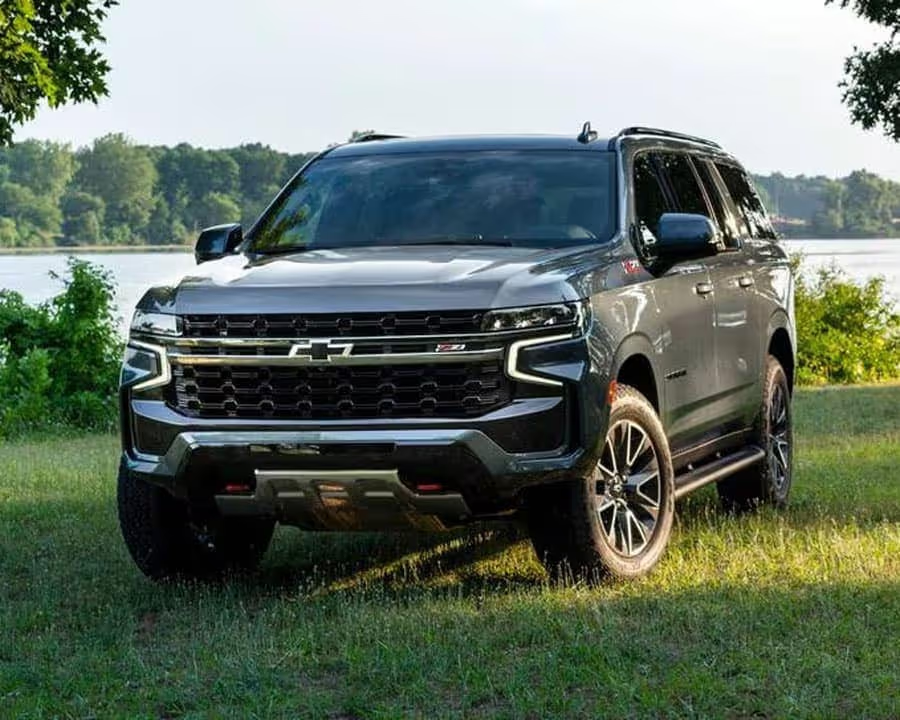
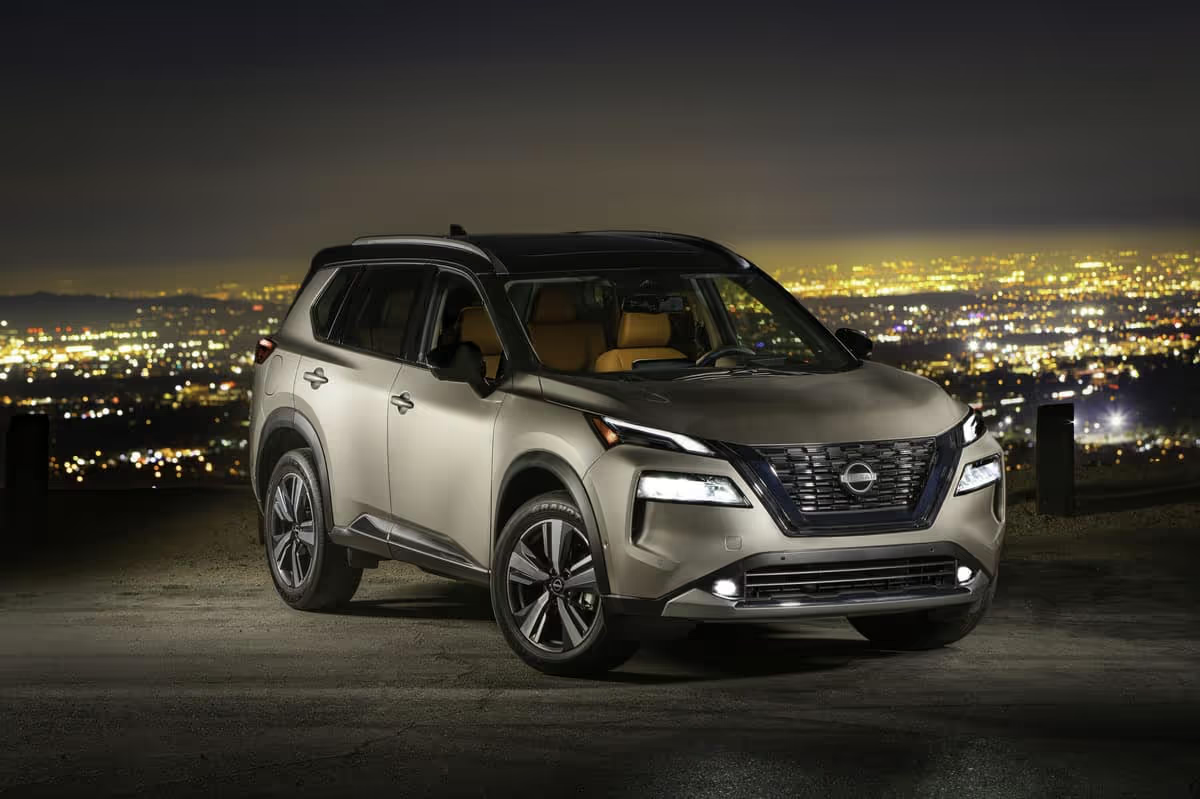
One of the most common budget mistakes is choosing the body style before setting the budget. An SUV sounds more practical until you realize it costs $100-$150 more per month than a comparable sedan and uses $50-$80 more in fuel per month. Once you know your actual payment ceiling, then explore what body styles fit within it, rather than picking the body style and working backward to justify the cost. Our comparison of sedans vs SUVs breaks down the full cost difference between the two.
What Your Credit Score Does to Your Payment
Two people buying the exact same vehicle with different credit scores can end up with payments that are $40-$100 apart per month over a 60-month loan. A credit score of 720 or above unlocks the best rates from most lenders and manufacturer finance arms. If your score is currently in the 650-690 range, a deliberate 6-12 month credit improvement effort before you shop can meaningfully lower your monthly payment on the same vehicle. The most effective moves: pay down revolving balances below 30% utilization and make sure all existing accounts are current.
Hidden Costs That Catch Buyers Off Guard
Beyond the regular monthly costs, here are the one-time and periodic costs that often catch buyers by surprise:
- Dealer fees: NJ dealers charge a documentation fee (typically $400-$699), and on a lease, there is often an acquisition fee ($800-$1,100) paid at signing
- Gap insurance: for both leases and financed vehicles, gap coverage protects you if the car is totaled and you owe more than it is worth. It costs $200-$400 for a lease term and is usually worth carrying.
- First tire replacement: a common oversight in long-term budget planning. A set of tires on most vehicles runs $600-$1,200 depending on size and brand.
- Registration at purchase: first-time NJ registration includes a title transfer fee and initial registration costs that add to the out-of-pocket cost at signing
How Vantage Helps You Shop Within Your Budget
One of the most valuable things a broker does is present real pricing on the vehicles that actually fit your situation, not the vehicles that would maximize the dealer's commission. At Vantage, we start with your budget and work from there, sourcing competitive quotes from NJ and tri-state dealers on vehicles that make sense for your numbers.
You can browse available inventory to start narrowing options, or get your free quote in under 5 minutes and we will help you figure out what fits. No spam. No pressure. Unsubscribe anytime.







.jpg)