Sell Your Car for the Most Money.
Highest price. No hassle. Paid quickly.
We handle the buyers, paperwork, and payoff. You just get paid.
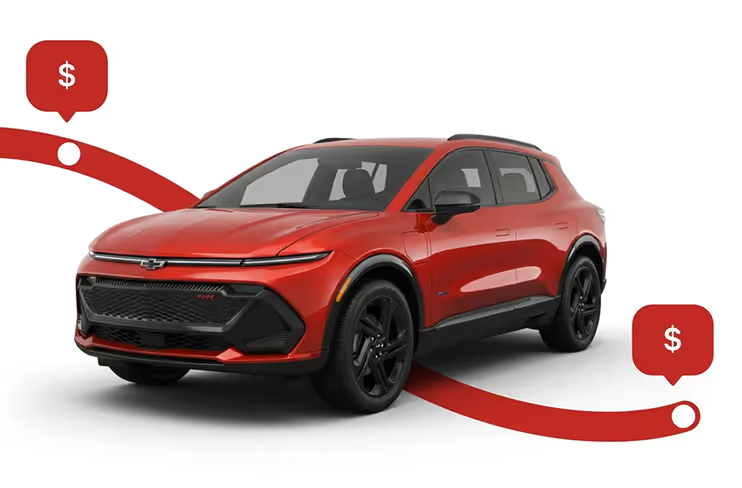
We Make the Market Compete
Others give insultingly low offers. We get you the highest price. No games. No surprise deductions. No chasing customer service.
How To Get The Most Money For Your Car
Share Your Car Details
License plate or VIN. A few quick questions. That’s it.
We Get You Competing Offers
We shop it to dealers and buyers so the price goes up — not down.
We Pick It Up. You Get Paid.
Free pickup. Same-day payment. We handle payoff and paperwork.
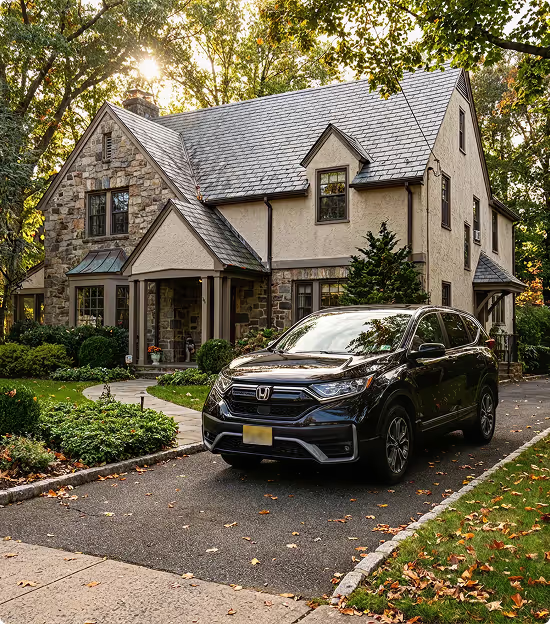
82,350 miles
Excellent condition
REAL EXAMPLE
How Sarah Got $1,550 More
“I was about to accept the Honda dealer’s $22,800 offer when my friend told me to try Vantage. I entered my plate number, got offers the next day, and the winning bid was $1,550 more with zero extra effort. They picked up the car from my office and I had the check the same day.”

Sarah M.
Montclair, NJ
LOCAL HONDA DEALER OFFER
$22,800
VANTAGE BEST OFFER
$24,350
SARAH’S EXTRA VALUE
$1,550
What’s Included When You Sell Your Car Through Vantage
Highest offer, zero running around. We handle the parts people hate.

Highest Offer, Not a Lowball
We create competition so you can take the top number — not the safe one.
Free Pickup Anywhere
We’ll pick up your vehicle at home, work, or wherever it’s easiest.

We Handle Payoff + Paperwork
If you have a loan, we coordinate payoff and help you close it cleanly.

Fast Offers
You’ll get a real answer quickly — without chasing online marketplaces and dealerships.

Zero Obligation
If you don’t like the number, you don’t take it. Simple.

Get Paid Without the Runaround
No awkward negotiating. No strangers test-driving your car. No wasted Saturdays.
687
Testimonials
What Our Customers Say
People come for the number. They stay for how easy we make it.
Very easy, hassle free experience getting my new car. A pleasure to do business with, takes the stress away from a usually stressful task.
Very easy, hassle free experience getting my new car. A pleasure to do business with, takes the stress away from a usually stressful task.
Megan Mazzeo
My wife and I recently moved from the city and needed a car but didn’t know where to start. At first we tried online, but it was honestly a little overwhelming. I reached out to a local friend for leads, and he pointed me to Vantage. I hopped on a call with Sean after work and gave him a rough outline for what we were looking for. I’m not a car guy, so it was basically: “I need something safe, reliable, and not falling apart.” Sean very much IS a car guy, and he took it from there. After going over our budget, he recommended a couple options, as well as compelling reasons to lease instead of buying used as we had planned. The next morning we went back and forth via text to hash out the details, and then that afternoon a beautiful brand new car within our budget rolled into our driveway. I signed some paperwork with his team, and that was that. Literally less than 24 hours after the initial phone call, I was all set. It was easier than 99% of all my other projects that go into moving to the burbs. The whole experience was extremely communicative and chill. And on top of everything else…I straight up love this car. I fear I’m a car guy now. Thanks, Vantage.
My wife and I recently moved from the city and needed a car but didn’t know where to start. At first we tried online, but it was honestly a little overwhelming. I reached out to a local friend for leads, and he pointed me to Vantage. I hopped on a call with Sean after work and gave him a rough outline for what we were looking for. I’m not a car guy, so it was basically: “I need something safe, reliable, and not falling apart.” Sean very much IS a car guy, and he took it from there. After going over our budget, he recommended a couple options, as well as compelling reasons to lease instead of buying used as we had planned. The next morning we went back and forth via text to hash out the details, and then that afternoon a beautiful brand new car within our budget rolled into our driveway. I signed some paperwork with his team, and that was that. Literally less than 24 hours after the initial phone call, I was all set. It was easier than 99% of all my other projects that go into moving to the burbs. The whole experience was extremely communicative and chill. And on top of everything else…I straight up love this car. I fear I’m a car guy now. Thanks, Vantage.
Stephen Gumbrecht
George Kordas
Mike Liloia
Very nice company. They helped me find the vehicle I wanted and helped sell my old car as well. Everyone in the company is great and very helpful explaining all the steps involved. Would highly recommend using them.
Very nice company. They helped me find the vehicle I wanted and helped sell my old car as well. Everyone in the company is great and very helpful explaining all the steps involved. Would highly recommend using them.
DreadBasil
I rarely write any reviews, I do find it necessary that I write one this time.I haven't purchased a new vehicle for quite some time. When I decided to move forward I dreaded the thought of having to go through the process of dealing with multiple dealerships, gathering quotes etc. and having to deal with pushy, non-transparent sales and finance people. Don't get me wrong, not all dealerships are that way or have staff looking to make big profit margins. If you've bought or leased any vehicle, you know those sales and finance guys are out there looking to make the absolute most profit possible. They get you going this way and that way. That's their business, to make money, I get that but the frustration, time and effort just isn't worth it to me.So, with that said, I was told by Brandon an employee of Vantage Auto Group to give them a try. Tommy C. was my contact and I have to say, from day one this was the best experience I had ever had with purchasing a new vehicle. No hassle, no frustration, no running back and forth to dealerships. Everything was taken care of with the utmost professionalism, transparency in order to satisfy the customer (Me). Aside from a minor setback which was corrected immediately, Tommy came through with the new truck that I was looking for. Hassle free, I received delivery even with a little parting gift which was very much appreciated.I am 100% satisfied and would highly recommend using Vantage Auto Group for your next lease or purchase of a new/used vehicle.Thanks again Tommy and All at Vantage Auto GroupA Happy customerAndy
I rarely write any reviews, I do find it necessary that I write one this time.I haven't purchased a new vehicle for quite some time. When I decided to move forward I dreaded the thought of having to go through the process of dealing with multiple dealerships, gathering quotes etc. and having to deal with pushy, non-transparent sales and finance people. Don't get me wrong, not all dealerships are that way or have staff looking to make big profit margins. If you've bought or leased any vehicle, you know those sales and finance guys are out there looking to make the absolute most profit possible. They get you going this way and that way. That's their business, to make money, I get that but the frustration, time and effort just isn't worth it to me.So, with that said, I was told by Brandon an employee of Vantage Auto Group to give them a try. Tommy C. was my contact and I have to say, from day one this was the best experience I had ever had with purchasing a new vehicle. No hassle, no frustration, no running back and forth to dealerships. Everything was taken care of with the utmost professionalism, transparency in order to satisfy the customer (Me). Aside from a minor setback which was corrected immediately, Tommy came through with the new truck that I was looking for. Hassle free, I received delivery even with a little parting gift which was very much appreciated.I am 100% satisfied and would highly recommend using Vantage Auto Group for your next lease or purchase of a new/used vehicle.Thanks again Tommy and All at Vantage Auto GroupA Happy customerAndy
Andy Weber
Meagan Greenberg
Stacy Sackett
Had a great experience, our rather urgent needs were addressed promptly and professionally. Thank you, Elka Green, for your recommendations! We’ll come back, happy customers.
Had a great experience, our rather urgent needs were addressed promptly and professionally. Thank you, Elka Green, for your recommendations! We’ll come back, happy customers.
Victor O
Frequently Asked Questions About Selling Your Car
Quick answers before you submit your car.
Dealerships lowball your trade-in because they need room to make profit when they resell it.
Here's the math:
Your car is worth $18,000 at auction.
Dealership offer:
They offer you: $15,000
They sell it retail for: $21,000
Their profit: $6,000
They need that $3,000 buffer below market value because they have to:
- Park it on their lot (costs money)
- Pay a salesperson's commission
- Cover reconditioning costs
- Make their profit margin
Vantage offer:
We offer you: $17,500
We sell it at auction or to wholesale buyers: $18,000
Our margin: $500
We can pay more because:
- We don't have a big car lot with overhead
- We're not trying to retail it with huge markup
- We sell directly to auctions or wholesale buyers
- We make smaller margin per car, but in higher volume
You get $2,500 more. We still make money. Everyone wins except the traditional dealership.
Plus we come to you. No wasting your Saturday at a dealership.
No problem. We handle the loan payoff directly with your lender. If you have positive equity, you get the difference. If negative, we can roll it into your next lease.
Yes. If your lease is ending or you want out early, we can often get more than your buyout price and help you pocket the difference.
Anytime after 12 months. Just give 30 days' notice.
Zero cost. Zero obligation. We only get paid if you accept an offer.
Offers are valid for 7 days. Most customers complete the sale within 2–5 days.
Title or lease agreement, registration, driver’s license, keys, and payoff info if financed. We help with anything missing.
All over the US of A. The majority of our vehicles are sourced in New Jersey, New York, and Connecticut primarily but we’re available to help nationwide. Free pickup throughout the tri-state area.
A quick 10–15 minute visual check to confirm condition and mileage. If it matches what you submitted, you’re paid immediately.
ACH same day, paper check at pickup, or applied toward your next car. The choice is yours.
Yes. We buy cars in all conditions — running or not. Just be honest for accurate offers.
Want to Trade In Your Car Instead?
We can sell your current car and help you get your next one — all at wholesale pricing.
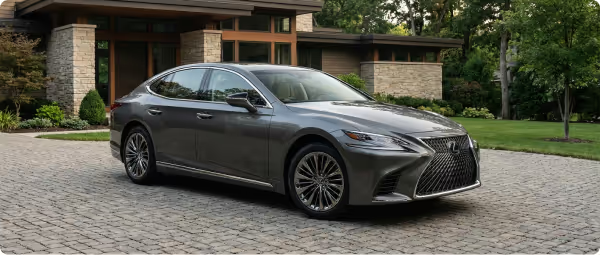
Get the Most for Your Current Car
Trade it through Vantage and use the proceeds however you want.
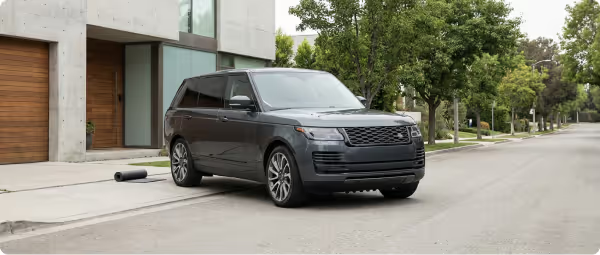
Save the Most on Your Next Car
Want a new lease? We’ll shop deals and deliver it to your driveway.