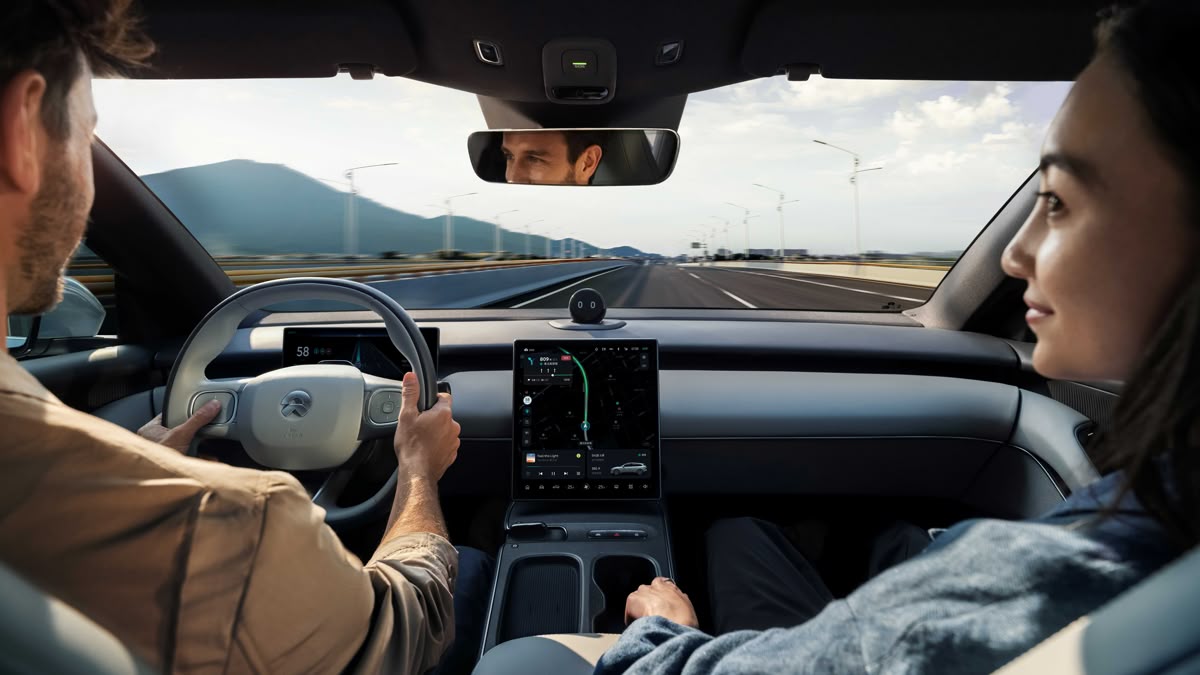
What Changed: The Federal $7,500 Credit Is Gone
If you came here expecting a guide to capturing the $7,500 federal EV tax credit through a lease, here is the straight answer: that credit no longer exists. Under the One Big Beautiful Bill Act (Public Law 119-21), the federal clean vehicle credit and the commercial pass-through that leasing companies used to fold into lease deals both ended for vehicles acquired (paid for) after September 30, 2025. There is no federal $7,500 flowing through a new EV lease today, so do not budget around it.
The old story that leasing "unlocks" the credit regardless of income is dead. Here is what actually lowers an EV lease payment in New Jersey now, and how to make sure every real incentive shows up in your numbers.
Want real numbers on your next car?
Tell us what you're looking for and we'll source your options across 350+ dealer partners. There's no obligation.
How EV Lease Pricing Actually Works Now
An EV lease payment is built from a few core numbers, and none of them is a federal credit anymore. Three levers do the real work:
- Manufacturer lease cash. This is a discount the automaker funds specifically for leases. It is the closest thing to the old credit, and on some EVs it is larger than $7,500 was.
- The money factor. This is the lease equivalent of an interest rate. A lower money factor means a lower monthly payment.
- The residual value. This is what the leasing company expects the car to be worth at the end of the term. A higher residual means you are financing less of the car, so the payment drops.
When all three line up in your favor, an EV lease can still pencil out to a low monthly payment relative to the sticker price. The difference now is that the savings come from the manufacturer and the lease structure, not from Washington.
Manufacturer Lease Cash Is the New Lever
Automakers know the federal credit is gone, and many are responding with their own lease incentives to keep EVs moving. These programs change month to month and vary by model, trim, and region, so the number that mattered last month may not be the number this month. Some brands are offering several thousand dollars in lease cash on specific EVs, and a few have run promotions larger than the old federal amount. Because these offers are set by the manufacturer, they are real and documented, not a tax position you have to hope gets passed through.
How to Make Sure the Incentive Is in Writing
This is where buyers still get shortchanged. The mechanics are different from the old credit, but the discipline is the same: make the incentive show up on paper. Ask your dealer or broker for the lease worksheet and look for the capitalized cost, the cap cost reductions, the residual, and the money factor. Any manufacturer lease cash should appear as a cap cost reduction, lowering the amount you finance. If someone quotes you a great payment but cannot point to where the lease cash lands in the numbers, that is a red flag. A dealer can quietly keep manufacturer lease cash instead of applying it to your deal, and you would never see it in the monthly payment alone.
For a current picture of what EV incentives are available in New Jersey, see our post on NJ EV incentives in 2026.
What About the NJ Charge Up Rebate?
New Jersey's Charge Up NJ program is separate from anything federal and, as of 2026, still offers a point-of-sale rebate of $1,500 on an eligible new battery-electric vehicle, or up to $4,000 for income-qualified buyers, applied right at the dealership. Two cautions. First, the program has paused in past years once annual funding ran out, then restarted when the next budget cycle began, so confirm funding is currently open before you count on it. Second, New Jersey's sales tax exemption on EVs is gone: EV purchases and leases now carry the full 6.625 percent, the same as any other vehicle. If Charge Up funding is available when you sign, ask that the rebate be itemized on your buyer's order the same way you would with manufacturer lease cash.
What Makes a Good EV Lease Deal Now
With the federal credit off the table, a strong EV lease comes down to the fundamentals: generous manufacturer lease cash, a low money factor, a healthy residual, and a state rebate if funding is open. Stack those and the payment can still be excellent. The key is knowing which EV is currently penciling best, because the incentives shift every month.
If you want to see which EV is leasing well in New Jersey right now, browse current inventory here or talk to a broker who tracks these programs monthly. If you are shopping for one, see current EV lease deals in New Jersey.
Full Disclosure
Vantage Auto Group earns a broker fee, disclosed upfront. We work with New Jersey dealerships and track EV lease incentives closely. When a client is considering an EV lease, we check which manufacturer lease cash and active state rebates may apply before they sign; the licensed dealership structures the deal.
Request a Quote and we will show you how an EV lease pencils out for you right now. No spam. No pressure. Unsubscribe anytime.