
APR stands for annual percentage rate. It is the true cost of borrowing money to buy a car, expressed as a yearly percentage. Unlike the interest rate alone, APR accounts for fees that some lenders fold into the loan, giving you a more complete picture of what you are actually paying. A difference of just a few percentage points can add thousands of dollars to the total cost of your loan. Understanding APR before you sign is one of the most practical things you can do as a car buyer.
Want to know what rate you qualify for? Get a free Quick Quote and we will walk you through the numbers.
What Does APR Mean on a Car Loan?
APR stands for annual percentage rate. It represents the yearly cost of borrowing money, expressed as a percentage of the loan amount. When a lender approves your car loan, they are not doing it for free. They take on risk, and APR is how that cost gets priced into your deal.
Every car loan has a principal, which is the amount you borrow. APR determines how much extra you pay on top of that principal over the life of the loan. A $30,000 loan at 6% APR costs significantly less than the same loan at 9% APR, even though the amount borrowed is identical.
One quick note: you may see the term APY, or annual percentage yield, when researching rates. APY applies to savings and investment accounts. APR applies to borrowing. If you are taking out a loan, APR is the number that matters.
Want real numbers on your next car?
Tell us what you're looking for and we'll source your options across 350+ dealer partners. It's free, and there's no obligation.
APR vs Interest Rate: What Is the Difference?
Many car buyers use APR and interest rate interchangeably, but they are not the same thing.
- The interest rate is the cost of borrowing the principal, expressed as a percentage.
- APR includes the interest rate plus any fees the lender charges, such as origination or processing fees, expressed as a single yearly percentage.
- Because APR captures more of the true cost, it is the better number to use when comparing loan offers from different lenders.
- Two loans with the same interest rate can have different APRs if one lender charges higher fees.
- On most auto loans the gap between interest rate and APR is small, but it still matters on larger loan amounts.
When shopping multiple loan offers, always compare APR to APR, not just the stated interest rate.
How Is APR Calculated?
Your APR is not arbitrary. Lenders calculate it based on several factors that reflect how risky you are as a borrower and what the current lending environment looks like.
- Credit score and history. This is the biggest factor. A higher credit score signals to lenders that you reliably repay debt, which means lower risk and a lower APR for you.
- Down payment. A larger down payment reduces the amount you need to borrow and signals financial stability, both of which can improve your rate.
- Loan term length. Longer terms sometimes carry higher APRs because the lender's money is tied up longer, increasing their risk exposure.
- Debt-to-income ratio. Lenders look at how much of your monthly income already goes toward existing debt. A lower ratio can help your APR.
- Vehicle type. New vehicles typically qualify for lower APRs than used ones. Manufacturers sometimes offer promotional rates on new models.
- Lender and market rates. Different lenders price risk differently. Broader economic conditions, including Federal Reserve benchmark rates, also influence what lenders charge across the board.
No single factor determines your APR on its own. Lenders weigh all of them together when they generate an offer.
What Is a Good APR for a Car Loan in 2026?
This is the most common question car buyers ask about financing, and the answer depends almost entirely on your credit score. Here are the typical APR ranges for 2026 based on credit tier and whether the vehicle is new or used.
New Car APR by Credit Tier
- Super prime (781+): 3.5% to 5.0% APR. Borrowers in this range get the best rates available. Manufacturer promotional 0% APR offers are reserved for this tier on select models.
- Prime (661-780): 5.0% to 7.5% APR. Still competitive. Most buyers in this range qualify for strong terms, especially with a solid down payment.
- Near prime (601-660): 7.5% to 11.0% APR. Rates jump noticeably here. Shopping multiple lenders -- banks, credit unions, and online lenders -- is critical in this range.
- Subprime (501-600): 11.0% to 15.0% APR. Rates are significantly higher. A larger down payment or a qualified co-signer can make a meaningful difference.
- Deep subprime (below 500): 15.0% to 20.0%+ APR. Limited options. Consider improving credit for 3-6 months before purchasing, or explore credit union programs designed for credit rebuilding.
Used Car APR by Credit Tier
- Super prime (781+): 4.5% to 6.5% APR.
- Prime (661-780): 6.5% to 9.0% APR.
- Near prime (601-660): 9.0% to 13.0% APR.
- Subprime (501-600): 13.0% to 18.0% APR.
- Deep subprime (below 500): 18.0% to 22.0%+ APR.
Used car APRs run 1 to 3 percentage points higher than new car rates across every credit tier. Lenders consider used vehicles higher risk because their value depreciates faster and is less predictable.
How to Know If Your APR Is Good
Compare your offered rate to the averages for your credit tier above. If your offer is within or below the range, you are getting a fair deal. If it is above the range, shop another lender before signing. Getting a second or third quote takes 15 minutes and can save you hundreds to thousands over the life of the loan.
Vantage Auto Group is a licensed New Jersey auto broker. We help you understand your financing options and find a competitive program through our dealer partners, and the licensed dealership and its lenders set your final rate and terms. Knowing the typical ranges above helps you recognize a fair offer when you see one. We break down how auto financing works in New Jersey — including who actually makes the credit decision.
How APR Changes Your Monthly Payment
The clearest way to understand APR is to see it in dollars. Here is a simple example using a $30,000 loan over 60 months.
- At 6% APR: approximately $580 per month, with roughly $4,800 paid in total interest over the life of the loan.
- At 9% APR: approximately $623 per month, with roughly $7,355 paid in total interest over the life of the loan.
That 3-percentage-point difference adds up to about $43 more per month and approximately $2,555 more in total interest over five years. On a $40,000 or $50,000 vehicle, the gap grows further. The APR you lock in at signing stays with you for the entire loan unless you refinance. Getting it right from the start is worth the effort.
Can You Negotiate APR on a Car Loan?
Sometimes, yes. Here is what actually moves the needle, in priority order.
- Get pre-approved before you shop. A pre-approval from a bank or credit union gives you a real rate to work from. Dealers know they need to beat it or you will use your own financing. This is the single most effective step you can take.
- Improve your credit profile before applying. Even a modest improvement in your score can shift you into a better rate tier. Paying down existing balances and correcting errors on your credit report can help more than most people expect.
- Shorten the loan term if the payment is affordable. Shorter terms often carry lower APRs. A 48-month loan typically comes with a better rate than a 72-month loan.
- Increase your down payment. More money down reduces the loan amount and signals lower risk to the lender.
- Compare multiple lenders. Banks, credit unions, and third-party lenders all price risk differently. Getting three or four quotes is not extra work. It is how you find the best available rate.
- Consider a qualified co-signer. A co-signer with strong credit can help you qualify for a lower rate if your own profile is limited.
- Negotiate the vehicle price first. Reducing the purchase price reduces the loan principal, which lowers total interest paid even if the APR stays the same.
If you are working with Vantage, we help you weigh your options and understand the deal, so you are not figuring this out on your own. The licensed dealership and its lenders set the final rate.
Common APR Traps to Avoid
These are the mistakes that cost car buyers the most money.
- Focusing only on the monthly payment. Dealers can make almost any payment work by stretching the loan term. A lower monthly payment paired with a higher APR over more months usually means you pay significantly more in total.
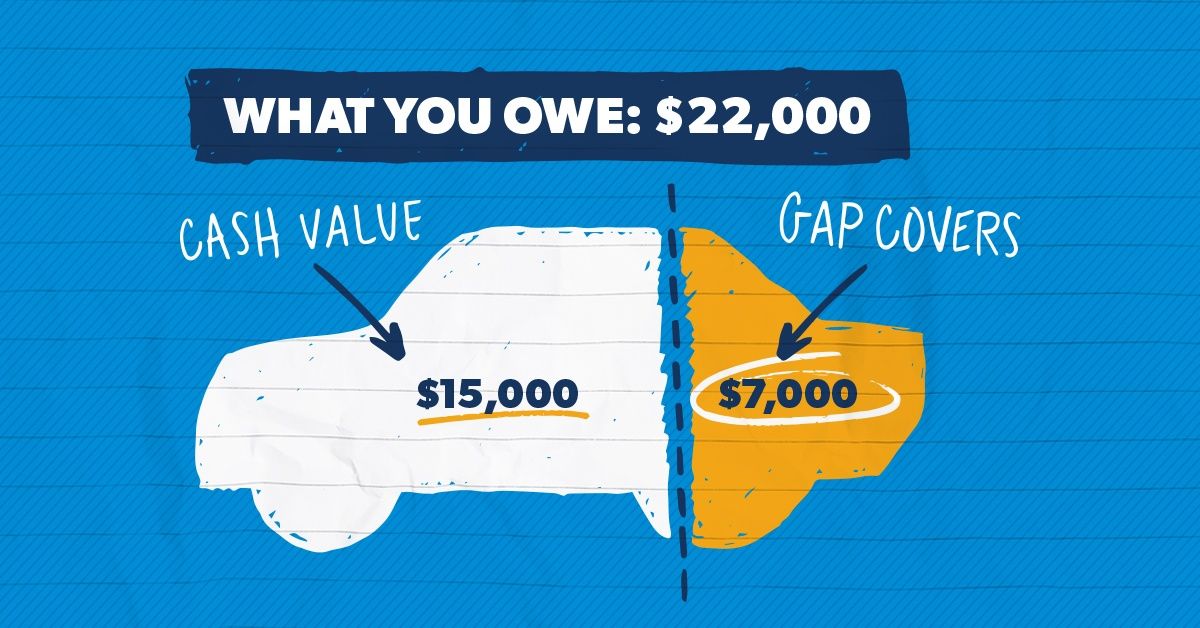
- Extending the loan term too long. 72 and 84-month loans are common, but longer terms usually carry higher APRs and result in substantially more total interest. They also increase the risk of going underwater on the loan, meaning you owe more than the car is worth.
- Rolling fees and add-ons into the loan. Every dollar added to the principal gets multiplied by the APR over time. Dealer add-ons, extended warranties, and gap insurance are often available elsewhere for less and should not automatically be financed.
- Skipping pre-approval. Walking in without a pre-approval gives the dealer more control over your financing terms. Pre-approval shifts that control back to you.
- Not comparing multiple offers. The first rate you are quoted is rarely the best one available to you. A second or third quote almost always turns up something better.
How Vantage Helps Make Financing Clearer
Understanding APR is one thing. Navigating the financing process, with different lenders, term structures, and a finance office that has its own incentives, is another situation entirely.
Vantage is a licensed New Jersey auto broker, not a lender. We do not set your rate, but we do help you understand the numbers and find a competitive program through our dealer partners before you walk into any dealership, so there are no surprises at the signing table. The licensed dealership and its lenders handle your credit approval and final terms, so you see the deal clearly and you are not making a major decision under pressure.
Ready to get started? Get a free Quick Quote or start a credit application to get the process going.
Frequently Asked Questions
What is a good APR on a car loan?
For new cars: super prime borrowers (781+) typically see 3.5% to 5.0%, prime (661-780) see 5.0% to 7.5%, and near prime (601-660) see 7.5% to 11.0%. Used car rates run 1 to 3 points higher. Compare your offered rate to these ranges. If your offer is above the range for your credit tier, shop another lender before signing.
Is APR negotiable on a car loan?
Sometimes. The most effective approach is to arrive with a pre-approval from your own lender, which gives you a benchmark the dealer has to compete with. You can also improve your APR by strengthening your credit profile, increasing your down payment, or shortening your loan term before applying.
What is the difference between APR and interest rate on a car loan?
The interest rate is the cost of borrowing the principal, expressed as a percentage. APR includes the interest rate plus any fees the lender charges, making it a more complete picture of the total cost of the loan. When comparing offers from multiple lenders, always compare APR to APR.
Does a longer loan term increase APR?
Not automatically, but longer loan terms often carry higher APRs because the lender's money is at risk for a longer period. A 72-month loan will frequently have a higher APR than a 48-month loan for the same borrower and vehicle. Longer terms also result in significantly more total interest paid over the life of the loan.
Can I get a good APR on a car loan with fair credit?
Yes, though your options are more limited than for borrowers with prime or super-prime credit. Shopping multiple lenders, particularly credit unions and online lenders, is especially important in this range. A larger down payment or a qualified co-signer can also help. Arriving with a pre-approval gives you the most leverage regardless of your credit tier.
Is APR different for new vs used car loans?
Yes. New vehicles typically qualify for APRs that are 1 to 3 percentage points lower than used vehicles across every credit tier. Lenders consider new cars lower risk because their value is more predictable. Manufacturer-sponsored promotional rates, including 0% offers, are almost always limited to new vehicles.
Will refinancing my car loan lower my APR?
It can. If your credit score has improved since you took out the original loan, or if market rates have dropped, refinancing may qualify you for a lower APR and reduce your monthly payment or total interest paid. Refinancing generally delivers the most benefit when you are early in the loan term and still have a significant principal balance remaining.