
The Best EV Lease Changes Every Month
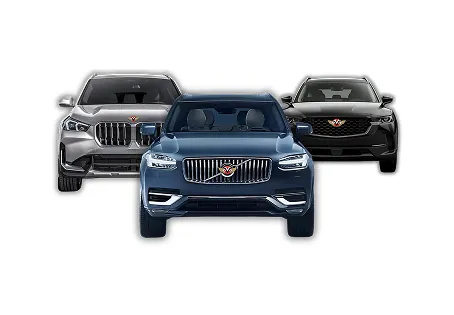
This is the most important thing to understand about EV leasing: there is no permanent answer to which vehicle is the best deal. Residual values, money factors, and manufacturer lease support programs shift every month. A vehicle with a spectacular lease deal in January may be average by April, while another model quietly becomes the best deal in its class with no press coverage at all.
What I can tell you is which vehicles have consistently been in contention and what to look for when evaluating any EV lease deal.
Want real numbers on your next car?
Tell us what you're looking for and we'll source your options across 350+ dealer partners. There's no obligation.
What Makes an EV Lease Deal Good
Three numbers determine your lease payment: the cap cost (essentially the selling price), the residual value (what the car will be worth at lease end, set by the leasing company), and the money factor (the interest rate equivalent). A good EV lease has a low cap cost, a high residual, and a low money factor, and ideally strong manufacturer lease cash reducing the cap cost further. The federal commercial EV credit that used to help ended for vehicles acquired after September 30, 2025.
Manufacturer lease support, where the brand subsidizes residuals or money factors to make their vehicles more attractive, is what separates a truly competitive lease from a mediocre one.
Models That Have Led in Early 2026
Chevrolet Equinox EV
GM has aggressively supported the Equinox EV with strong residuals and manufacturer incentives. It carries strong manufacturer lease support, and its price point keeps it accessible. Payments have been among the lowest in the EV segment.
Hyundai Ioniq 5 and Ioniq 6
Both have been strong lease candidates with good range, solid residuals, and manufacturer support. The Ioniq 6's aerodynamic efficiency gives it above-average range-to-price ratios.
Kia EV6
Closely related to the Ioniq 5 platform. Strong lease support from Kia Financial and competitive pricing make it a consistent value option.
Tesla Model 3 and Model Y
Tesla's vehicles are popular but lease at full price without the kind of manufacturer lease subsidies that domestic and Korean brands use. Payments are competitive only when Tesla cuts prices directly. Worth checking but rarely the best deal on payment alone.
Why Leasing Usually Beats Buying for EVs
EV technology is advancing fast. A vehicle that is top-of-class today may feel outdated in three years when your lease ends. Leasing transfers the depreciation and obsolescence risk to the leasing company. You hand the car back at lease end without worrying about resale value or whether anyone will buy a three-year-old EV.
Battery degradation is another factor. Owning an EV for 8 to 10 years means living with a battery that has lost some capacity. Leasing every three years means you always have a fresh battery and current technology. For more on why leasing typically makes more financial sense for EVs, read our post on how EV leasing works in NJ now.
What to Ask Before Signing Any EV Lease
Do not evaluate an EV lease on monthly payment alone. Ask these questions:
- What is the money factor? (Multiply by 2,400 to get the approximate APR equivalent.)
- What is the residual percentage? (Higher is better for you.)
- Is any manufacturer lease cash reflected in the cap cost? By how much?
- Is the NJ Charge Up rebate applied? On which line?
- What are the mileage allowance and per-mile overage rate?
If you want to see current EV availability and get a quote that reflects all active incentives, browse available inventory here.
Full Disclosure
Vantage charges a broker fee disclosed before you commit. We track EV lease programs monthly and can tell you which models currently have strong lease programs for your situation, based on actual deal math rather than a manufacturer's press release.
Get your free EV lease quote in 5 minutes. No spam. No pressure. Unsubscribe anytime.