Range Anxiety Was a Real Problem. In 2015.
When the first mass-market EVs launched, range anxiety was a legitimate concern. Early models offered 70 to 100 miles of range, public charging was sparse, and the technology was new enough that uncertainty was reasonable. In 2026, the landscape is fundamentally different. Most mainstream EVs offer 250 to 350 miles of range, NJ highways have fast chargers at regular intervals, and the majority of EV owners report that range anxiety disappears within weeks of ownership.
This does not mean range is never a consideration. It means the concern should be calibrated to current reality, not to early-generation EVs.
Want real numbers on your next car?
Tell us what you're looking for and we'll source your options across 350+ dealer partners. There's no obligation.
How Much Range Do You Actually Need?
The average NJ round-trip commute is under 50 miles. An EV with 250 miles of rated range has five days of commuting range in a single charge. Even in winter, when cold weather reduces range by 20 to 30 percent, that same vehicle delivers 175 to 200 miles, still covering multiple days of typical commuting before needing a charge.
The math gets even more favorable when you add home charging. If you plug in every night, you start every day with a full charge. You are never working down from a declining tank. The mental model shifts from watching a gauge to simply waking up to a full battery.
What Real-World Range Looks Like
EPA range ratings are measured under standardized test conditions. Real-world range depends on:
- Speed: Highway driving above 65 mph significantly reduces range compared to city driving
- Temperature: Cold weather draws power for heating; hot weather draws power for cooling
- Payload: Passengers and cargo add weight
- Terrain: Hilly or mountainous driving reduces range versus flat highways
A reasonable rule of thumb for NJ: plan on 80 to 85 percent of EPA range in moderate weather, and 65 to 75 percent during January and February. A 300-mile rated vehicle delivers roughly 195 to 225 miles in practical NJ winter conditions.
What About Road Trips?
Road trips require planning that gas vehicles do not. This is the legitimate remaining objection to EV ownership. On a road trip, you will need to stop and charge. DC fast chargers can add 150 to 200 miles of range in 20 to 30 minutes, comparable to a gas station stop if you time it with a meal or coffee break.
NJ's major corridors are reasonably covered. The Turnpike, Garden State Parkway, and I-78 all have charging stations. Electrify America, Tesla Supercharger, and ChargePoint networks cover most of the Northeast corridor. For trips to Florida, the Carolinas, or Boston, fast charger coverage is good. For remote locations in rural areas, trip planning becomes more important.
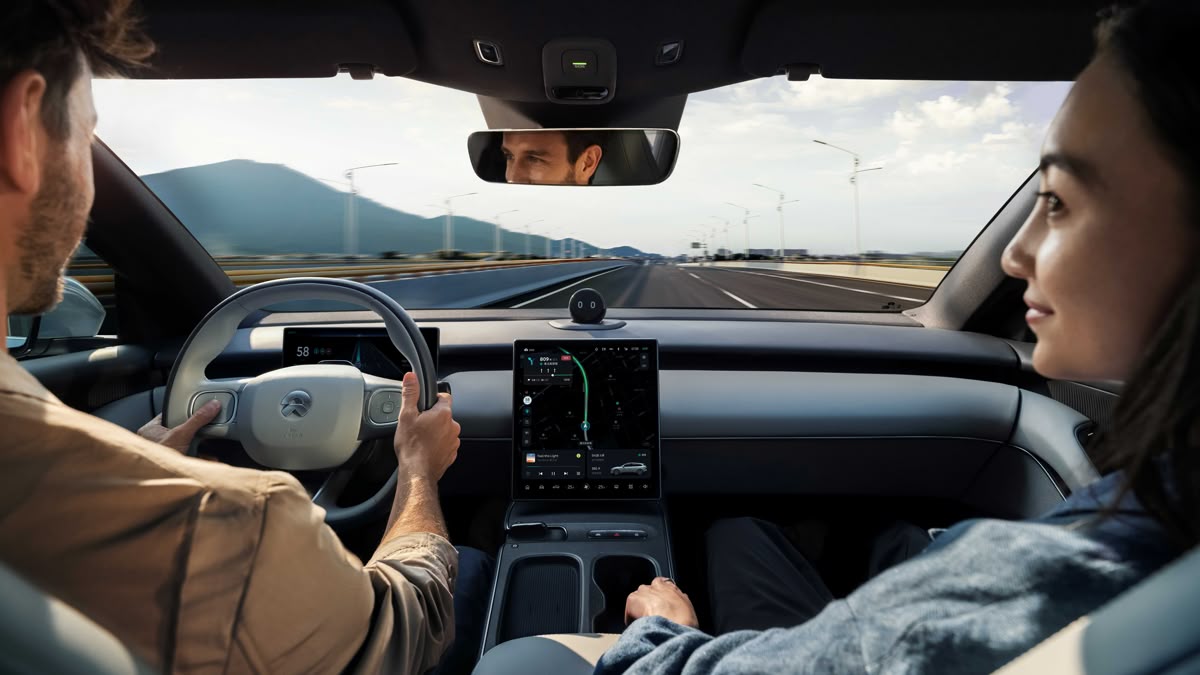
Most EV navigation systems now plan routes with charging stops automatically when the destination exceeds available range.
The Home Charging Difference
This is the single biggest factor in whether range anxiety is a real issue or not. EV owners with home charging almost never experience range anxiety in practice. The car charges overnight and starts each day full. Without home charging, you are relying on public infrastructure for regular top-ups, which introduces genuine unpredictability.
If home charging is not available to you, a hybrid or PHEV is a more pragmatic choice than fighting public charging logistics daily. For an honest assessment of whether an EV makes sense for your specific situation in NJ, see our post on whether an EV is worth it in NJ.
Full Disclosure
Vantage earns a broker fee, disclosed before you commit. If range anxiety is a genuine concern based on your situation, we will tell you that and recommend a hybrid instead. We are not in the business of pushing EVs on people who are not good candidates for them.
Ready to figure out whether an EV fits your life? Get your free quote in 5 minutes. No spam. No pressure. Unsubscribe anytime.